A front tooth can break when you least expect it — while eating, during sports, or from an accident. When it happens, the first question is always: can my tooth be saved?
In many cases, the answer is yes. In this post, we'll walk you through a real patient case at Smile Well Dental where a front tooth broke while eating ribs. Instead of extracting the tooth and placing an implant, we saved the natural tooth using a combination of root canal therapy, orthodontic treatment, and a ceramic crown.
What Happened
The patient came to our clinic after their front tooth broke at the gumline while eating ribs. The tooth fractured deep below the gum, leaving very little tooth structure visible above the surface. In cases like this, simply placing a crown on top isn't possible — there's not enough tooth to hold it.
At many clinics, a tooth broken this severely would be extracted and replaced with a dental implant. However, saving a natural tooth is always the best option when it's possible. Natural teeth preserve jawbone, maintain the surrounding gum tissue, and feel more comfortable long-term.
Our team developed a step-by-step treatment plan to save the tooth.
Step 1: Assessing the Broken Tooth
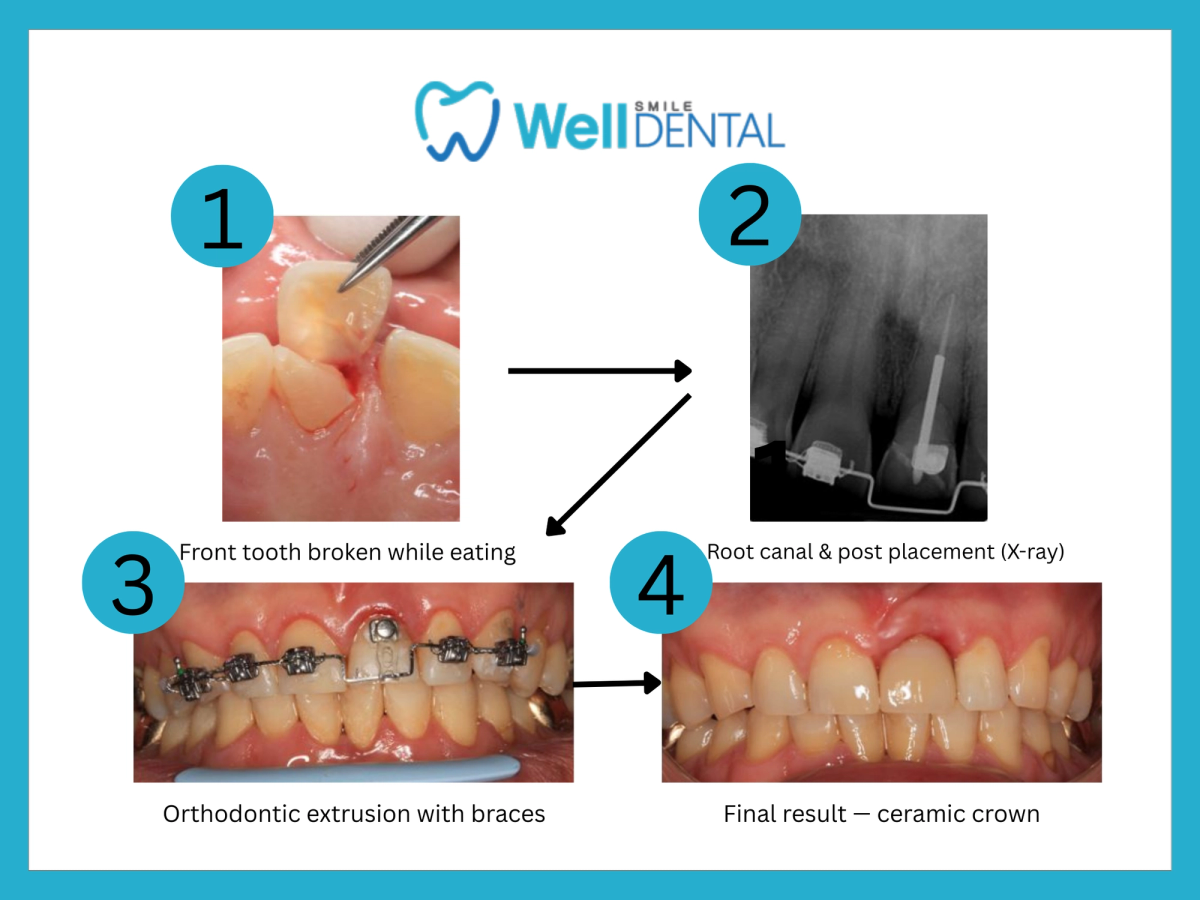
The first step was to carefully examine the fracture. The clinical photo showed the tooth had broken below the gumline, with the broken fragment still partially attached. We needed to determine whether the root was intact and strong enough to support a restoration.
After a thorough examination, we confirmed the root was healthy — meaning the tooth could be saved with the right approach.
Step 2: Root Canal Treatment & Post Placement
Because the fracture extended deep into the tooth, the nerve inside was compromised. We performed a root canal to remove the damaged nerve, clean the canals, and seal the tooth to prevent infection.
After the root canal, we placed a post inside the root. Think of the post as an anchor — it extends into the root canal and gives the future crown something solid to attach to. The X-ray shows the post securely placed inside the treated root, confirming a strong foundation for the next step.
Step 3: Orthodontic Extrusion — Pulling the Root Up
Here's where the treatment gets creative. Even with the post in place, the remaining tooth structure was still too far below the gumline to support a crown. We needed more tooth above the gum.
The solution: orthodontic extrusion. We attached braces to the surrounding teeth and used orthodontic force to slowly pull the broken tooth's root upward out of the gumline. This process took several weeks and gradually exposed more of the healthy root structure.
This step is critical because it gives the crown enough tooth to grip onto, ensuring the restoration is stable and long-lasting. Without this step, the crown would fail over time.
Step 4: Ceramic Crown — The Final Result
Once enough tooth structure was exposed through orthodontic extrusion, we removed the braces and prepared the tooth for the final restoration: a ceramic crown.
The ceramic crown was custom-made to match the color, shape, and size of the patient's surrounding teeth. The result speaks for itself — the restored tooth looks completely natural, blending seamlessly with the rest of the smile.
The patient went from a severely broken tooth to a fully restored, natural-looking smile — all without extraction or an implant.
Why Save a Natural Tooth Instead of Getting an Implant?
While dental implants are an excellent option for missing teeth, saving your natural tooth has several advantages:
- Preserves natural bone and gum tissue — extraction can lead to bone loss over time
- No surgery required — orthodontic extrusion and a crown are less invasive than implant surgery
- Better long-term feel — nothing feels quite like your own tooth
- Lower overall cost — saving a tooth is often more affordable than extraction, bone grafting, and implant placement
- Shorter total treatment time — implants typically require months of healing before the final crown
At Smile Well Dental, we always explore every option to preserve your natural teeth before recommending extraction.
How Long Does This Treatment Take?
Every case is different, but here's a general timeline:
- Root canal + post placement: 1–2 visits
- Orthodontic extrusion: 4–8 weeks (varies by case)
- Ceramic crown placement: 1–2 visits after extrusion is complete
In total, most cases like this take approximately 2 to 4 months from start to finish.
Broke a Front Tooth? Visit Smile Well Dental
If you've broken a front tooth, don't assume it needs to be pulled. At Smile Well Dental, our experienced team will evaluate your situation and recommend the best treatment plan — whether that's saving your tooth or exploring other options like implants.
We have clinics in North Vancouver, Surrey, Langley, and Coquitlam, and we accept CDCP patients.
Contact us or book online today for a consultation.